wsop
Should Poker Fans Be Concerned with Low WSOP TV Ratings on ESPN?
Despite initial industry excitement, the 2026 WSOP Main Event's return to ESPN saw final table TV ratings fall short of the 'Poker Boom' era, sparking debate about poker's visibility on traditional cable.
TL;DR
The 2026 World Series of Poker Main Event's broadcast on ESPN, anticipated to reignite mainstream interest, garnered significantly lower viewership than its 2000s predecessors. However, industry insiders argue that shifting media consumption habits and a thriving live poker scene suggest these numbers don't reflect the game's overall health.
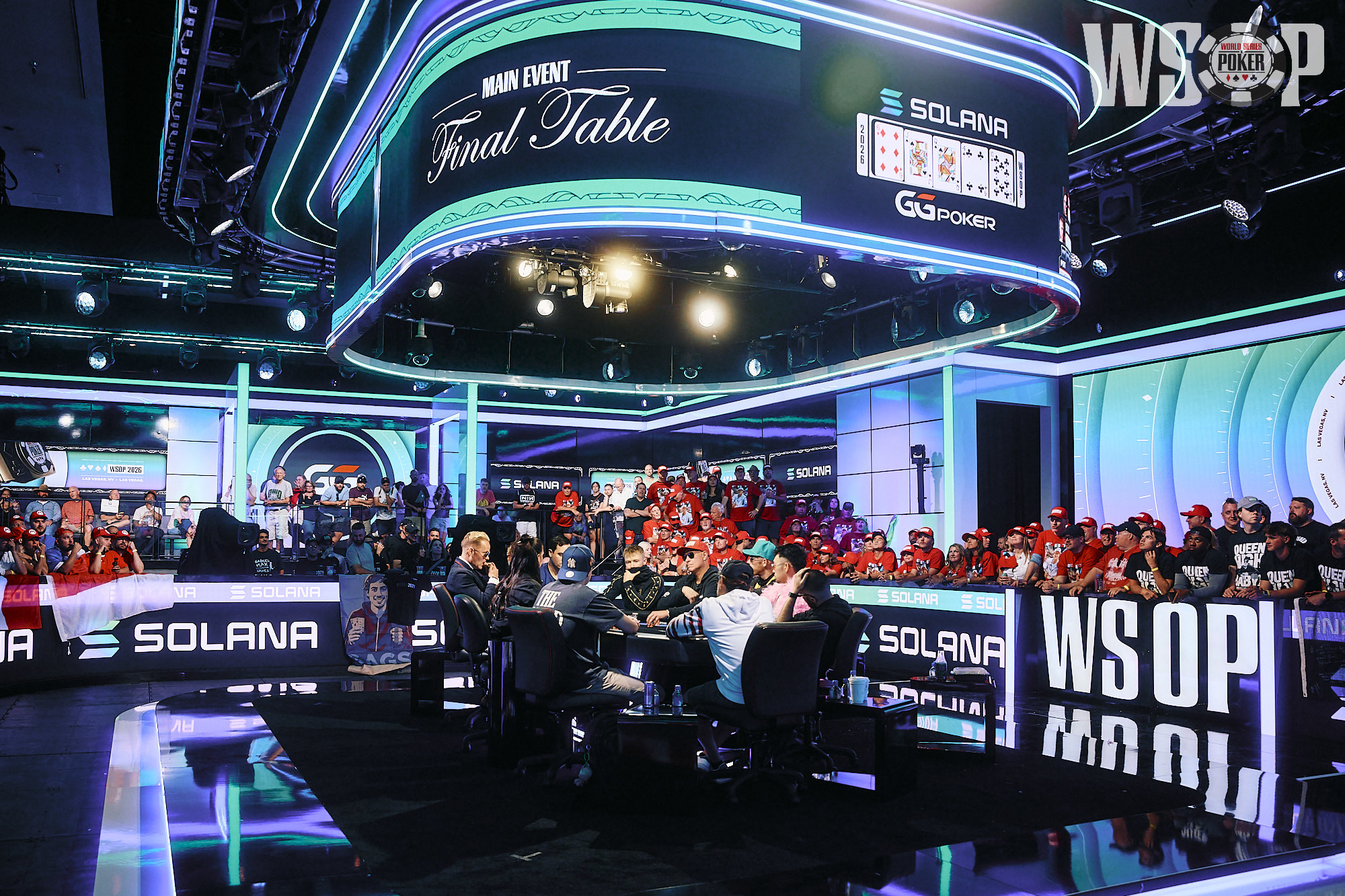
The poker world buzzed with anticipation just a few months ago, as the World Series of Poker (WSOP) Main Event made its much-heralded return to ESPN for the first time since the COVID-19 pandemic. The expectation was clear: poker, back on the nation's biggest sports network, would once again draw in casual fans, echoing the glory days of the Chris Moneymaker era. The strategic three-week delay between Day 8 and the final table was designed to build a crescendo of interest around the contenders. Yet, as the final table numbers have now been tallied, the broadcast enthusiasm appears to have outstripped actual viewership, leaving some to wonder if the industry's excitement was premature.
Lance Bradley, a seasoned poker journalist who covered the series for ESPN.com, shed light on these figures in his Saturday Substack column. His report revealed that the first night of final table action, which aired on ESPN2 on August 3rd, failed to crack the top 100 cable shows, meaning its viewership data remained unquantified by Nielsen. The subsequent days, however, offered more concrete, if somewhat sobering, statistics.
On the second day of the final table, with seven players remaining and broadcast on the main ESPN channel, the event drew 451,000 viewers. The climactic heads-up battle, where Lucas Jumalon ultimately defeated Lauri Saaskilahti to claim a staggering $10 million prize and the coveted bracelet, saw a peak of 593,000 viewers. While respectable, these numbers pale in comparison to the WSOP Main Event broadcasts of the 2000s.
Bradley's analysis starkly illustrates this contrast, recalling a time when poker commanded significantly larger audiences. For instance, over 2 million people tuned in to watch Joe Cada make history as the youngest World Champion in 2009. Just a year prior, 1.9 million households witnessed Peter Eastgate secure his Main Event title. The current figures, therefore, represent a substantial decline from those peak years, prompting the inevitable question: should poker fans be concerned?
However, a deeper dive into the media landscape reveals that these numbers don't tell the whole story. The world of cable television has undergone a seismic shift since the late 2000s, rendering direct comparisons somewhat misleading. According to the Pew Research Center, cable TV subscriptions have plummeted by 40% since the 2010s, with only an estimated 32% to 36% of U.S. households currently maintaining a traditional cable or satellite package.
This dramatic decline in cable penetration is largely attributed to the rise of streaming services. Platforms like YouTube TV have replaced traditional cable bundles for many, while others have opted out of linear television entirely in favor of on-demand giants like Netflix and Hulu. Modern audiences, particularly younger demographics, consume media in fundamentally different ways, often preferring shorter, digestible clips over lengthy live broadcasts.
Indeed, the WSOP's own digital strategy reflects this trend. Daily highlight videos from the final table, posted on YouTube, garnered nearly 1 million views. These bite-sized recaps offered ample satisfaction for fans who might not have committed to an entire livestream. Furthermore, social media platforms are awash with clips of memorable WSOP hands and player interviews, demonstrating that interest in the game remains robust, albeit distributed across various digital channels.
Beyond the evolving media consumption habits, the 2026 Main Event final table itself lacked the kind of mainstream star power that often draws casual viewers. There were no household names like Michael Mizrachi or Phil Ivey, the latter of whom finished ninth and heavily headlined the 2009 coverage, to capture broader public imagination. This absence undoubtedly contributed to the more modest traditional viewership figures.
Ultimately, the question of whether Main Event TV viewership truly matters in the current era is open to interpretation. What should matter most to the poker community, however, is the undeniable health and growth of the game at its core. Card rooms globally are thriving, and major tournaments like the WSOP and World Poker Tour (WPT), along with countless local daily events, continue to attract massive fields. The casual and recreational players, while perhaps not tuning into ESPN as they did in 2006, are still showing up in droves, whether it's at the WSOP or for a $1/$3 No-Limit Hold'em game in Texas or California.
The 2026 WSOP Main Event itself serves as a powerful testament to this enduring appeal, drawing over 9,200 players — the fourth-largest turnout in the event's storied history. This robust participation, coupled with the widespread engagement across digital platforms, strongly suggests that the game of poker is flourishing. Therefore, concerns over traditional TV ratings, while understandable, may be largely misplaced in an increasingly fragmented and digital media landscape. The game is alive and well, simply finding new ways to connect with its audience.