business
Nevada Severs Ties With National Council On Problem Gambling
Nevada's problem gambling council has dramatically cut ties with its national counterpart, citing fundamental differences over prediction markets and emerging gambling risks.

TL;DR
The Nevada Council on Problem Gambling has officially severed its affiliation with the National Council on Problem Gambling. This decisive move comes in the wake of the national organization's controversial partnership with prediction market firm Kalshi, a company currently embroiled in legal disputes within Nevada.
In a significant development shaking the landscape of problem gambling advocacy, the Nevada Council on Problem Gambling (NCPG) has formally severed its long-standing affiliation with the National Council on Problem Gambling (NCPG). This dramatic split, announced on August 13, 2026, stems directly from the national organization's controversial decision to partner with Kalshi, a prediction market firm, and its subsequent endorsement of prediction markets as a new category within its framework.
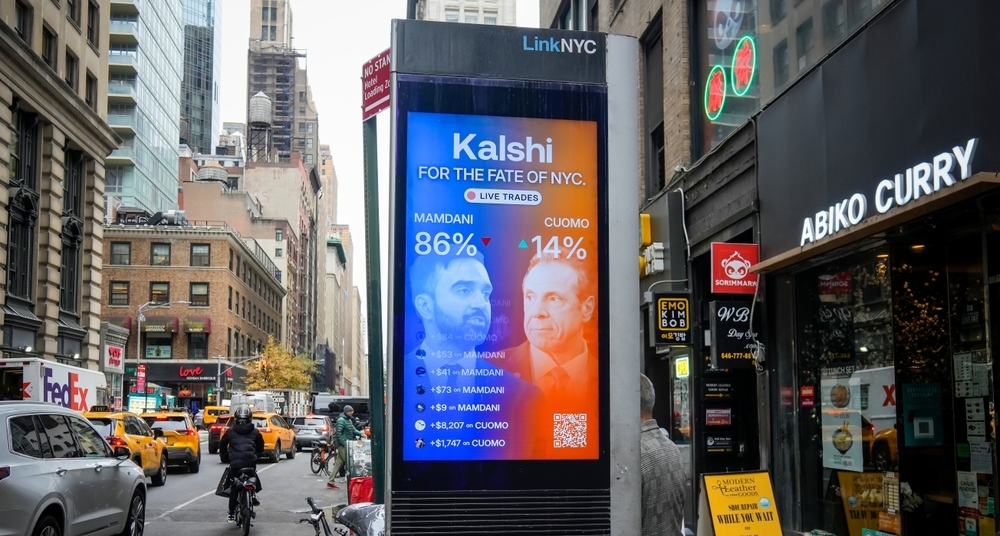
The genesis of this rift can be traced back to May when Kalshi donated a substantial $2 million to the National Council. Following this contribution, the national body not only embraced Kalshi but also established a novel subdivision specifically for traders in prediction markets. This move immediately raised eyebrows, particularly in Nevada, where Kalshi had been ordered to cease operations due to ongoing litigation with the Nevada Gaming Control Board (NGCB).
Trey Delap, Executive Director of the Nevada Council, articulated the gravity of their decision to the *Nevada Current*, stating, “After months of discussion, we’ve concluded that this is not simply a disagreement about one company.” He continued, emphasizing the broader implications: “It reflects a fundamental difference in how we believe a problem gambling organization should respond to emerging gambling risks.” This statement underscores a philosophical divergence that extends beyond a single corporate partnership, pointing to a deeper concern about the evolving nature of gambling and the infrastructure designed to mitigate its harms.
Prediction market firms, including Kalshi, have found themselves embroiled in legal skirmishes at both state and federal levels since Kalshi began offering sports event contracts in 2025. State gaming regulators contend that these platforms effectively circumvent existing state gaming laws, operating outside the established regulatory framework. Conversely, prediction market proponents argue that their offerings are fundamentally distinct from traditional sports betting, asserting a closer resemblance to traditional financial markets. They further contend that the Commodity Futures Trading Commission (CFTC) provides federal oversight for their industry, thus distinguishing them from state-regulated gambling entities.
The ongoing legal battle in Nevada is particularly salient. The NGCB secured a judicial order halting Kalshi's operations within the state, a temporary injunction as court proceedings unfold. The long-term impact of the Nevada Council's disaffiliation may well hinge on the ultimate outcome of the NGCB's federal lawsuit against Kalshi, which could set a precedent for how prediction markets are classified and regulated nationwide.
Delap further elaborated on the core issue, highlighting that the controversy surrounding prediction markets “has exposed a larger problem: Gambling innovation is moving faster than the public health infrastructure designed to address it.” He concluded with a forward-looking perspective: “Our answer isn’t to fight yesterday’s battle. It’s to build what the field needs next.” This sentiment suggests a proactive approach to evolving risks, rather than a reactive one.
A significant point of contention for the Nevada chapter, and indeed for other state groups, is the age restriction, or lack thereof, on prediction market platforms. Kalshi, for instance, allows users as young as 18 to trade, starkly contrasting with the 21-year minimum age for gambling prevalent in most states. Delap indicated to *The Current* that other state groups are also contemplating following Nevada's lead and potentially withdrawing from the national organization.
Indeed, this concern is not isolated. The Michigan Gaming Control Board (MGCB) had already withdrawn its support for the National Council on Problem Gambling in July. In a formal letter, the MGCB cited Kalshi’s involvement in litigation with Michigan and other states over its unlicensed sports event contracts. The MGCB expressed grave concerns that the national body’s partnership with Kalshi “could undermine state regulatory efforts and create confusion by suggesting Kalshi operates under the same consumer protection and regulatory oversight as licensed sports betting operators.” The Evergreen Council in Washington has also voiced similar concerns regarding the prediction market partnership, signaling a broader discontent.
The expansion of American sports betting since the Supreme Court overturned a federal ban in 2018 has seen 39 states, along with Washington D.C. and Puerto Rico, legalize betting markets. This boom has led to staggering revenue figures, with the American Gaming Association reporting commercial sports betting operations reaching $16.89 billion in 2025, a 22.7% increase from 2024. However, this growth has not been without its critics. Experts have voiced concerns about rising gambling trends among young people, and a 2024 study indicated an increase in bankruptcies in states with legalized online wagering.
The inclusion of prediction market contracts further complicates this landscape. These platforms are accessible to Americans regardless of their state's sports betting legality, drawing sharp criticism not only from state gaming regulators but also from federal officials who allege a lack of consumer protections. In March, a Republican senator introduced a bill aimed at prohibiting companies like Kalshi and Polymarket from offering sports and similar markets that resemble gambling. Concurrently, a former Trump administration official asserted in the same month that prediction markets are unequivocally a form of gambling, underscoring the growing legal and ethical scrutiny facing this burgeoning industry.